
Yes, Chinese-made diesel generators can be reliable, durable, and cost-effective. However, the quality varies considerably between manufacturers and product configurations. A well-built generator using a properly rated diesel engine, a suitable alternator, reliable controls, and documented factory testing can provide dependable power for commercial and industrial applications.
The important question is not simply whether a generator is made in China. It is who manufactured it, which components were used, how the generator was assembled and tested, and whether the supplier can support it after delivery.
At WALT POWER, we manufacture and export diesel generator sets for overseas customers. From my experience, two generators with the same advertised kVA rating can have very different specifications, prices, and operating capabilities.
In this article, I'll explain what makes a Chinese diesel generator worth buying, the problems importers should watch for, and how to evaluate a supplier before placing an order.

Shanghai, China.
Why Are Chinese-Made Diesel Generators So Competitive?
China has developed an extensive supply chain for diesel generator manufacturing. Engines, alternators, controllers, radiators, steel enclosures, electrical components, and other parts can be sourced from a wide range of manufacturers.
This gives Chinese generator suppliers considerable flexibility in product configuration and pricing.
However, a competitive manufacturing cost does not automatically mean every Chinese generator offers good value.
A supplier can use the same industrial supply chain to build a well-specified generator or to assemble a lower-cost product with compromises in critical components.
For overseas buyers, understanding that difference matters more than knowing China's total generator export volume.
A Broad Choice of Engines and Alternators
Chinese generator manufacturers can offer configurations using international engine brands such as Cummins and Perkins, as well as established Chinese engine brands such as Weichai, Yuchai, SDEC, FAWDE, and Yangdong.
Alternator options may include Stamford, Leroy-Somer, and other manufacturers, depending on the required power range and budget.
This variety allows buyers to select equipment for different applications, from small standby generators to larger industrial power systems.
The key is to verify the exact engine and alternator models rather than relying on brand names alone.
An Established Manufacturing Supply Chain
Generator manufacturing involves much more than assembling an engine and alternator.
The complete system also requires a suitable cooling arrangement, electrical protection, control system, base frame, vibration isolation, fuel system, and enclosure where applicable.
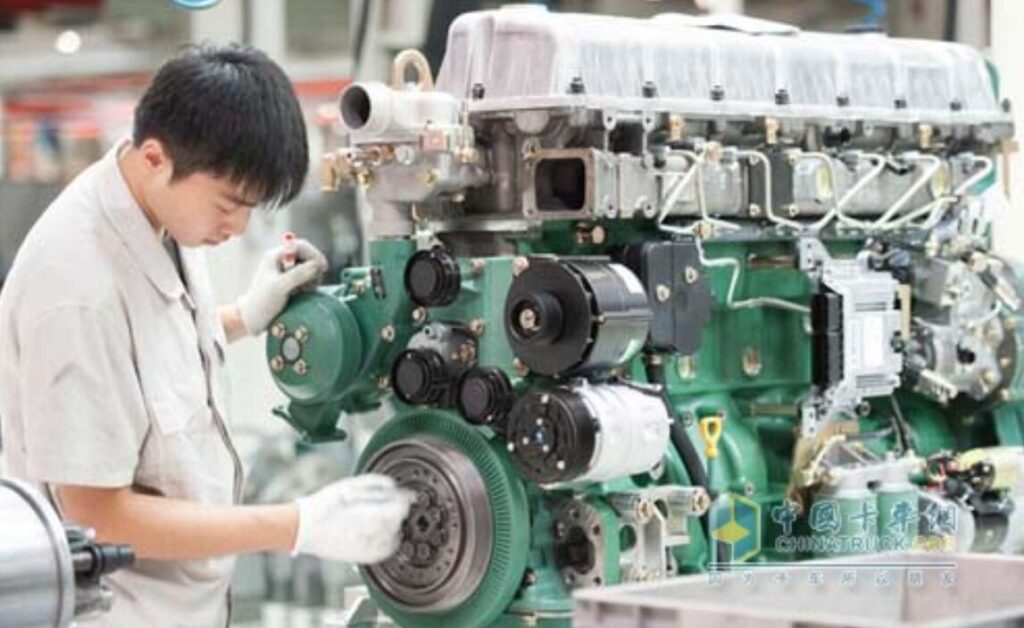
China's established industrial supply chain makes these components accessible, but the final quality still depends on component selection, assembly standards, and inspection.
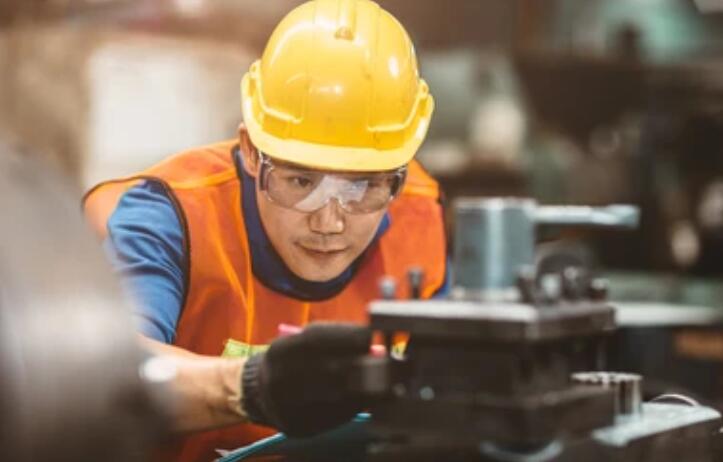
In my view, this is one of the main reasons Chinese-made generators can be competitive internationally: manufacturers have access to a broad range of components and can configure equipment around different customer requirements.
It is also why buyers need to compare specifications carefully.
Are All Chinese Diesel Generators the Same Quality?
No. Chinese-made diesel generators are available in different configurations, and their quality cannot be judged by country of manufacture alone.
Rather than dividing every Chinese manufacturer into fixed quality tiers, I find it more useful to compare generators according to their actual components and intended applications.
| Generator configuration | Typical characteristics | What buyers should verify |
|---|---|---|
| International-brand engine configuration | Uses an engine from an established international brand, paired with a specified alternator and control system | Exact engine model, genuine component identification, rated output, warranty support |
| Established Chinese-brand engine configuration | Uses a Chinese engine brand with an established manufacturing and service network | Engine performance, parts availability, fuel consumption, suitability for the application |
| Budget-oriented configuration | Prioritizes lower initial cost, potentially using less expensive engines, alternators, or controls | Actual rated power, component quality, testing, spare parts, and supplier support |
These are configuration categories, not universal quality rankings.
An appropriately specified generator using a Chinese-brand engine may be a better choice for a particular project than a more expensive configuration that does not match the operating requirements.
Likewise, installing a well-known engine does not guarantee that the entire generator set has been engineered or assembled correctly.
What About Cummins, Perkins, Deutz, and Isuzu?
It is important to distinguish an engine brand's origin from the location where an engine or complete generator set is manufactured.
For example, Cummins and Perkins are international engine brands, while some engine models supplied to Chinese generator manufacturers may be produced through manufacturing operations in China.
Deutz and Isuzu are also international engine brands, not Chinese domestic brands.
When comparing quotations, buyers should ask for the exact engine model and its manufacturing identification. A familiar brand name is not enough to establish the specification of the complete generator.
For more information on engine options, see our Cummins-powered diesel generator range
What Are the Most Common Problems With Cheap Chinese Diesel Generators?
The problems associated with low-cost generators are not unique to China. They can occur whenever a supplier prioritizes a low selling price over the suitability and quality of the equipment.
Nevertheless, there are several issues I recommend checking carefully when sourcing diesel generators from China.
1. Overstated Generator Power Ratings
One of the first things I examine in a generator quotation is whether the diesel engine can support the advertised electrical output.
A generator's rated output depends on the engine's available mechanical power, the alternator's efficiency, and the complete generating set's operating conditions.
A supplier may advertise a generator at an attractive kVA rating without clearly identifying whether that figure is prime power, emergency standby power, or maximum output.
These ratings are not interchangeable.
For example, a generator advertised as 100kVA standby power should not automatically be treated as a 100kVA prime-power generator.
My advice: Request the engine model, its applicable power rating, and the complete generator's prime and standby ratings. Check whether the figures are consistent with the manufacturer's technical documentation.
For industrial applications, I also recommend reviewing the expected operating hours, load profile, ambient temperature, and installation altitude.
2. Unclear Alternator Winding Materials
The alternator is another component that deserves attention.
In some budget-oriented configurations, suppliers may offer alternators with aluminum windings or other cost-reduced designs.
Copper and aluminum have different electrical and thermal characteristics. However, it would be incorrect to assume that winding material alone determines voltage stability or that every aluminum-wound alternator is inherently defective.
Alternator performance also depends on winding design, conductor sizing, insulation, cooling, excitation, and voltage regulation.
For WALT POWER generator quotations, we normally specify copper-wound brushless alternators. Where a particular alternator brand or model is required, it should be clearly identified in the technical specification.
My advice: Ask the supplier to confirm the alternator manufacturer, model, winding material, insulation class, excitation arrangement, and voltage regulation specifications.
Do not accept a quotation that describes the alternator only as a "high-quality AC motor."
A diesel generator uses an AC alternator, not an AC motor, to produce electrical power.
3. Refurbished, Misidentified, or Counterfeit Engines
Another risk is receiving equipment that does not match the engine specification stated in the quotation.
A low price may be attractive, but it should not prevent the buyer from checking whether the supplied engine is genuine and correctly identified.
Before shipment, I recommend requesting:
- The complete engine model and serial number.
- Clear photographs of the engine nameplate.
- The applicable engine technical datasheet.
- Confirmation that the supplied engine matches the quotation and purchase order.
- Relevant manufacturer or distributor documentation where available.
A serial number should be checked through the appropriate manufacturer's or authorized service channels when authenticity is in question.
For importers purchasing multiple units, these checks are particularly important because a component identification problem can affect spare-parts ordering and future servicing.
4. Insufficient Factory Testing
A generator that starts successfully without a load has not necessarily demonstrated its ability to supply the required electrical power.
Before shipment, buyers should understand what testing the manufacturer will perform and what records can be provided.
Depending on the generator model, application, and agreed inspection procedure, useful checks may include:
- Starting, stopping, and controller operation.
- Voltage and frequency under specified operating conditions.
- Operation at agreed load points.
- Engine temperature, oil pressure, and other operating parameters.
- Protection and alarm functions.
- Visual inspection of wiring, connections, and assembly.
For example, a customer may request a load test at 25%, 50%, 75%, and 100% of rated load. These are possible test points, not a universal requirement that every generator must follow.
Testing at 110% load should only be specified where the equipment's rating, overload capability, and manufacturer's instructions permit it.
At WALT POWER, we can discuss factory inspection requirements and provide applicable testing records, photographs, or videos according to the generator configuration and agreed order requirements.
My advice: Define the acceptance criteria before placing the order. A video showing a generator running is useful, but it should not be mistaken for a complete performance test.

How Can You Tell Whether a Chinese Diesel Generator Is Reliable?
When evaluating a generator supplier, I recommend checking five areas rather than comparing prices alone.
1. Verify the Engine and Alternator Specifications
Ask for a complete technical datasheet showing:
- Diesel engine brand and model.
- Prime and standby power ratings.
- Alternator brand and model.
- Rated voltage and frequency.
- Number of phases and power factor.
- Control module.
- Cooling system and fuel tank configuration.
The engine and alternator should be suitable for the intended generator output.
If a supplier cannot identify these basic components, I would be cautious about proceeding.
2. Check kVA, kW, and the Actual Power Rating
Many generator quotations use kVA, while buyers may calculate their electrical requirements in kW.
The relationship is:
kW = kVA × Power Factor
For a typical three-phase diesel generator rated at a power factor of 0.8:
- 100kVA × 0.8 = 80kW
- 250kVA × 0.8 = 200kW
- 500kVA × 0.8 = 400kW
For a single-phase generator rated at a power factor of 1.0, 10kVA corresponds to 10kW.
However, the applicable power factor must be confirmed from the generator specification.
Also, a generator's electrical output rating should not be confused with the engine's mechanical power rating.
For buyers who need continuous or extended operation, the distinction between prime and standby ratings is especially important.
3. Consider the Load Characteristics, Not Just Total kW
A generator must be selected for the equipment it will actually power.
A 100kW load consisting mainly of resistive equipment behaves differently from a 100kW installation containing large electric motors.
Motor starting can create a temporary demand for substantially more current than normal running conditions.
Air compressors, pumps, and other motor-driven equipment may require additional generator capacity or a different starting method.
Direct-on-line starting, soft starters, and variable-frequency drives can produce different starting demands and power-quality considerations.
When customers ask us to size a generator, I prefer to know which major loads will start, whether they start simultaneously, and whether any equipment is particularly sensitive to voltage or frequency changes.
This is often more useful than simply adding a fixed percentage to the total connected load.
4. Review Factory Inspection and After-Sales Support
A reliable supplier should be able to explain what inspection is included and what support is available after delivery.
For overseas importers, I recommend confirming:
- Warranty duration and conditions.
- Availability of engine and alternator spare parts.
- Controller manuals and wiring diagrams.
- Troubleshooting and remote technical support.
- Responsibility for local installation and commissioning.
- Procedures for reporting a warranty claim.
WALT POWER's standard warranty is generally one year or 500 operating hours, whichever comes first, subject to the terms confirmed for the specific order.
Warranty terms should always be checked against the quotation and purchase agreement rather than assumed from a general website statement.
5. Compare the Complete Specification, Not Only the Price
When two suppliers offer the same advertised power rating, I recommend placing their quotations side by side.
| Item to compare | Supplier A | Supplier B |
|---|---|---|
| Prime and standby ratings | Confirm | Confirm |
| Engine model | Confirm | Confirm |
| Alternator model and winding | Confirm | Confirm |
| Controller model | Confirm | Confirm |
| Voltage and frequency | Confirm | Confirm |
| Cooling and enclosure | Confirm | Confirm |
| Factory testing | Confirm | Confirm |
| Warranty and spare-parts support | Confirm | Confirm |
| Delivery terms and lead time | Confirm | Confirm |
This approach makes price differences easier to understand.
A lower quotation may represent genuine cost savings. It may also reflect a different engine, alternator, controller, enclosure, or level of included service.
Without comparing the complete specification, there is no reliable way to know.
How Are Chinese Diesel Generators Manufactured?
China has a broad range of manufacturing capabilities, from basic assembly operations to facilities using modern metal fabrication, enclosure production, electrical assembly, and testing equipment.
However, manufacturing methods vary between suppliers.
For example, a generator enclosure may involve steel cutting, bending, welding, surface preparation, and coating.
The quality of the finished enclosure depends not only on the equipment used but also on the materials, workmanship, coating system, and inspection.
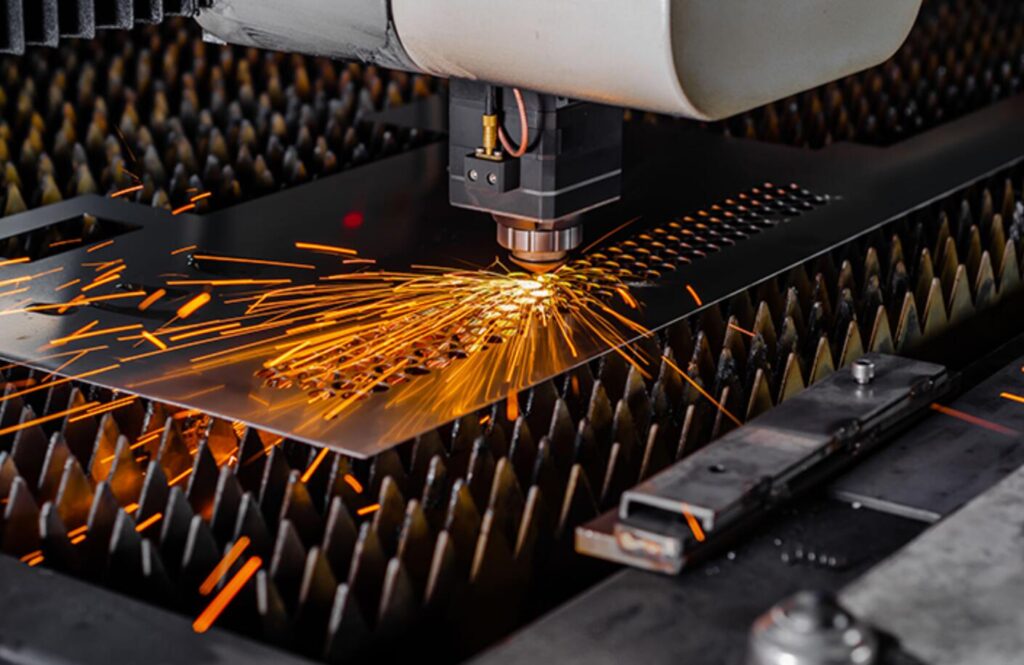
For customers operating generators near the coast, I pay particular attention to enclosure corrosion protection.
A standard painted steel canopy may not provide the same long-term protection as a configuration designed for a coastal environment.
Depending on the project, buyers may consider galvanized steel panels, suitable coating systems, and corrosion-resistant hardware.
These options should be specified and priced before production.
The same principle applies to cooling, noise reduction, and electrical protection: a generator should be configured for its actual installation conditions rather than selected solely from a standard product photograph.
Are Chinese-Made Generators Suitable for Prime Power and Industrial Use?
Yes, provided the generator is correctly rated and configured for the intended application.
Chinese-made diesel generator sets can be used for emergency standby power, prime power, and other applications where the equipment meets the required operating conditions.
The important distinction is between the generator's rated duty and the customer's actual operating requirements.
For example:
Emergency standby application: A generator supplies power during an interruption of the normal utility supply. The required rating depends on the applicable standby-duty conditions.
Prime-power application: A generator supplies power to a variable electrical load for extended operating periods, subject to the manufacturer's specified rating conditions.
Continuous-power application: A generator supplies a defined continuous load within its continuous-power rating and applicable operating conditions.
The ISO 8528 series provides a framework for defining generator ratings, performance requirements, and testing.
For more detail, see our guide to ISO 8528-1:2018 and diesel generator power ratings
A generator intended for prime power should not be selected simply because its standby rating appears sufficient.
Likewise, for demanding industrial applications, buyers should consider motor starting, transient voltage and frequency performance, cooling capacity, and the required electrical protection.
Why Can Two Chinese Generators With the Same kVA Rating Have Different Prices?
This is a question I believe more overseas buyers should ask.
Consider two quotations for a 100kVA diesel generator.
Both suppliers advertise the same nominal output, but the actual configurations may differ in several ways.
One may use a different engine model or duty rating. Another may specify a different alternator, controller, fuel tank, enclosure, or cooling arrangement.
The quoted price may also include different testing, warranty, documentation, and delivery conditions.
None of these differences is automatically good or bad. What matters is whether the configuration is appropriate for the buyer's intended use.
I would rather explain why a particular generator costs more than offer a lower price by changing critical components without making that change clear.
For importers and distributors, this is particularly important because the initial purchase price is only one part of the total cost.
Freight, customs clearance, installation, fuel consumption, maintenance, spare parts, and potential downtime also affect the long-term cost of ownership.
A cheaper generator that does not meet the required load or lacks accessible spare parts can become an expensive purchase.
How to Choose a Reliable Chinese Generator Manufacturer
Before placing an order, I suggest asking the supplier a few practical questions.
-
Can you provide the complete technical specification? The quotation should identify the engine, alternator, controller, and applicable power ratings.
-
Can you confirm the actual operating conditions? Voltage, frequency, phase, altitude, ambient temperature, load profile, and intended running hours should be considered.
-
What testing and inspection will be included? Agree on the scope of factory testing and the supporting records before production.
-
Can you provide the documents needed for importation? Requirements vary by destination, but may include commercial documents, product specifications, and applicable compliance documentation.
-
What happens if a technical problem occurs after delivery? Ask about troubleshooting support, warranty procedures, and spare-parts arrangements.
For international buyers, I also recommend checking whether the supplier understands the destination country's voltage, frequency, and import requirements.
For example, a 400/230V, 50Hz three-phase generator is not automatically suitable for a project requiring 120/208V, 60Hz.
These details should be settled before the order is confirmed.
If you are preparing an overseas purchase, our related guide on importing diesel generators from China may also be useful.
Frequently Asked Questions
What Are the Most Common Problems With Cheap Chinese Diesel Generators?
Potential problems include overstated power ratings, unclear engine specifications, unsuitable alternator configurations, inconsistent assembly quality, inadequate testing, and limited spare-parts support.
These risks are not exclusive to Chinese-made equipment. The best protection is to verify the complete technical specification and agree on inspection requirements before shipment.
How Can I Verify That a Chinese Generator Uses a Genuine Engine?
Ask for the engine model, serial number, and clear nameplate photographs. Where necessary, verify the identification through the engine manufacturer's authorized channels.
For the alternator, request its model and technical documentation, including the specified winding material and electrical characteristics.
Are Chinese Diesel Generators Suitable for Continuous Operation?
Some are, but not every generator is designed for the same operating duty.
The generator must have an appropriate prime or continuous rating, and its engine, alternator, cooling system, and maintenance requirements must match the intended load and operating hours.
Do not assume that an emergency standby generator can operate indefinitely at its advertised standby output.
Are Chinese-Made Generators Cheaper Than European or American Generators?
They can be, depending on the brand, configuration, manufacturing arrangements, and scope of supply.
However, comparing only the country of manufacture is misleading. A generator assembled in China using internationally branded components may have a very different cost structure from a budget-oriented unit.
Compare the complete specification and long-term ownership costs before deciding.
Conclusion: Are Chinese-Made Generators Worth Buying?
Yes, a well-specified Chinese-made diesel generator can be a dependable and economical choice. But I would never recommend selecting one simply because it is made in China or because the quoted price is lower.
The engine, alternator, rated output, assembly quality, testing, and after-sales support are what determine whether the generator is suitable for the job.
From my experience working with overseas generator buyers, the most productive discussions start with the application rather than the price.
If we know what equipment the generator must power, how often it will operate, and where it will be installed, we can make a much more informed configuration recommendation.
At WALT POWER, we supply diesel generator sets for overseas importers, distributors, contractors, and project buyers, with engine and alternator configurations selected according to the project requirements.
If you are comparing Chinese diesel generator suppliers, send us your required kVA or kW, voltage, frequency, application, and destination country.
You can contact WALT POWER or email to discuss a suitable configuration.
References
- ISO 8528-1:2018 — Application, ratings and performance — International Organization for Standardization.
- ISO 8528-6:2023 — Test methods for generating sets — International Organization for Standardization.
- ISO — Generating sets standards catalogue — International Organization for Standardization.


