

A power outage can bring everything to a halt. A 5 kVA generator seems like a good backup, but what exactly can it run?
A 5 kVA generator can typically handle a load of around 4000 watts, depending on the power factor. This means it can run essential appliances such as lights, fans, a refrigerator, and some small tools but may struggle with high-power devices like air conditioners and heaters.
Understanding what a 5 kVA generator can handle ensures you make the best use of its power capacity. Let's explore this further.
How Much Load Can A 5 kVA Generator Take?
A generator’s capacity is not always straightforward. The power factor, starting wattage, and running wattage affect what it can truly handle.
A 5 kVA generator can support a maximum load of around 4000 watts, assuming a power factor of 0.8. The actual devices it can run depend on their startup and running power requirements.

Understanding Generator Load Calculation
To determine how much a 5 kVA generator can power, consider the following:
| Appliance | Average Running Power (Watts) | Starting Power (Watts) |
|---|---|---|
| LED Bulbs (5x10W) | 50 W | 50 W |
| Ceiling Fan | 75 W | 150 W |
| Refrigerator | 150 W | 600 W |
| Microwave | 1000 W | 1200 W |
| Water Pump | 750 W | 2000 W |
| Air Conditioner (1HP) | 1200 W | 3000 W |
A 5 kVA generator can handle a mix of these appliances, but not all at the same time. The total wattage should not exceed 4000W to ensure smooth operation.
Can A 5 kW Generator Power A House?
Many homeowners want backup power for essentials. But is 5 kVA enough?
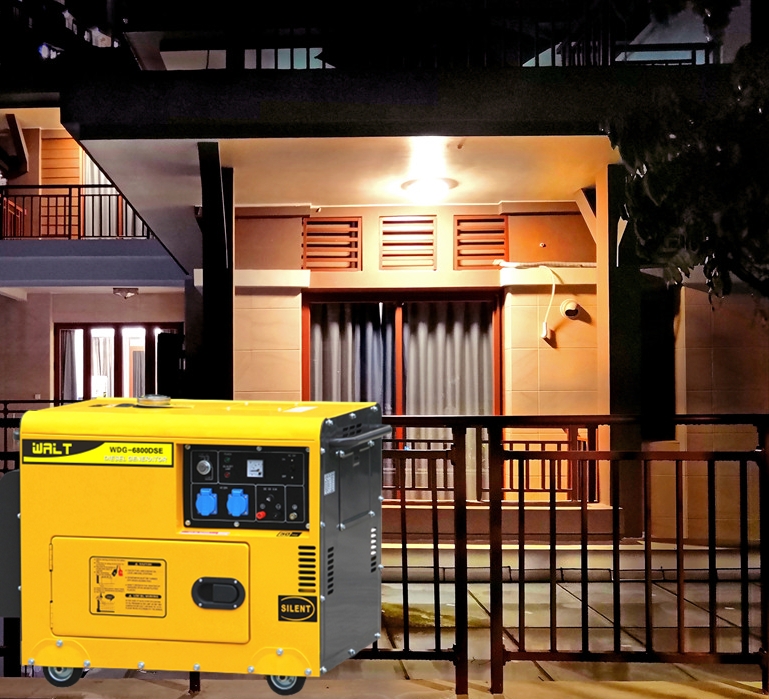
A 5 kVA (or 5 kW) generator can power a small house with essential appliances like lights, fans, a refrigerator, and a TV. However, it may not handle high-power devices like electric stoves, geysers, or large air conditioners.
What Can A 5 kVA Generator Run In A Home?
A typical small house needs power for the following:
- Lighting: LED bulbs consume little power.
- Fans and TV: Low-energy appliances that work well with a 5 kVA unit.
- Refrigerator: Most standard refrigerators run within its capacity.
- Computers and Routers: No issues running basic electronics.
- Water Pump and Microwave: Only one at a time due to their power surge.
Limitations Of A 5 kVA Generator
- Cannot power large air conditioners or electric water heaters.
- Not ideal for heavy-duty electrical appliances or entire large homes.
- Running too many high-wattage devices at once can overload it.
If you need to power a larger house with multiple high-power appliances, consider a 10 kVA or higher generator.
What Is The Current Capacity Of A 5 kVA Generator?
A generator's current output depends on voltage. The relationship follows:
A 5 kVA generator at 230V provides approximately 21.7A, while at 400V (three-phase), it gives around 7.2A per phase.

Current Calculation Based On Voltage
To calculate current:
[
Current (A) = \frac{{Power (W)}}{{Voltage (V)}}
]
| Voltage | Current Output (A) |
|---|---|
| 230V (Single-phase) | ~21.7A |
| 400V (Three-phase) | ~7.2A per phase |
Why Does Current Matter?
- Helps in choosing proper wiring and circuit protection.
- Ensures compatibility with appliances requiring a certain ampere rating.
- Prevents overloading and damage to sensitive electronics.
If your appliances require higher current, consider a larger generator or check if a three-phase supply suits your needs.
Conclusion
A 5 kVA generator is a good backup for small loads. It can power essentials like lights, fans, and refrigerators but is not ideal for heavy-duty appliances. Understanding its load capacity and current output ensures safe and efficient usage.
Buying And Technical Contact
You can contact us in many ways:
You can go to our website (URL: https://waltpower.com/contact/) and drop us a message.
You can email us:
Our Contact is: +8618717996108 (WhatsApp)


